Thinking to recall: How reasoning unlocks parametric knowledge in LLMs
Generative AI
More from the blog

Empty shelves or lost keys? Recall is the bottleneck for parametric factuality
Generative AI
Thinking of ACE? We Can Do It with Fewer Tokens
A Blog post by IBM Research on Hugging Face
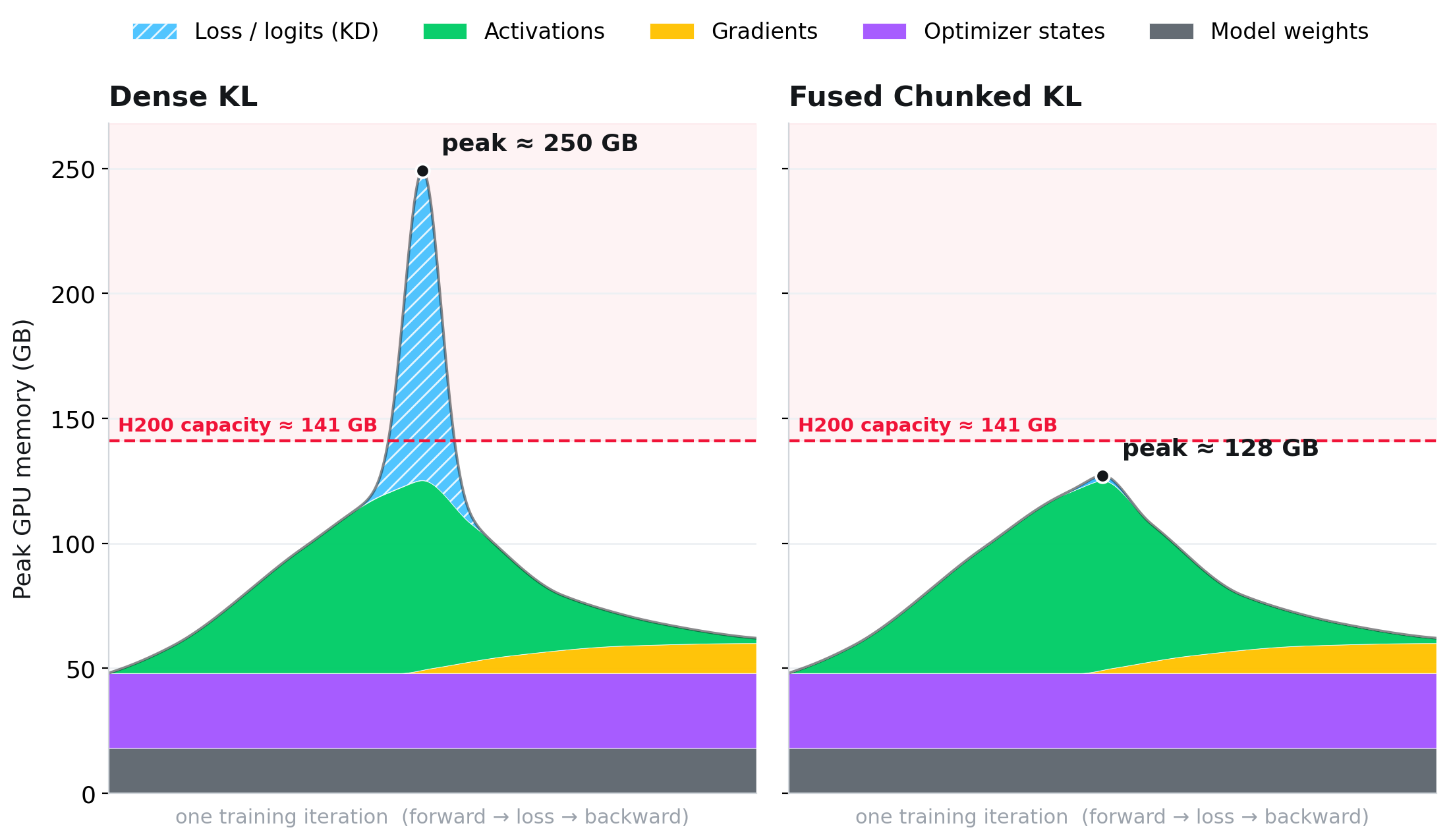
Making Knowledge Distillation Cheap Enough to Run at Scale
A Blog post by Multiverse Computing on Hugging Face

Gemini Robotics ER 2: powering robotics with video understanding, task orchestration, and multi-robot collaboration
Gemini Robotics ER 2 helps robots reason, collaborate, and solve real-world tasks. It represents a step change in video understanding, tool orchestration, and multi-robot collaboration for robotic applications.
Related papers
Artificial Intelligence for Real-Time Cyber Threat Classification and Emerging Threat Detection: A Structured Review of Methods, Datasets, Challenges, and Research Directions
The reviewed literature indicates that AI-based methodologies often demonstrate superior detection capabilities for intricate and previously unseen attack patterns compared to traditional methods; however, direct performance comparisons are complicated due to discrepancies in datasets, experimental designs, and evaluation protocols.
An explainable generative AI framework for detecting low-rate API-based DDoS attacks in cloud environments
Adaptive Repayment Optimisation for SME Lending: A Stochastic Programming Framework with Generative AI Explanation
The Adaptive Repayment Optimisation Engine is introduced, a novel framework that applies constrained stochastic optimisation to the design of loan repayment schedules for small and medium-sized enterprises (SMEs) and contributes to the operations research literature by bridging stochastic programming, explainable AI, and financial regulation in a novel application domain.
AoI Minimization in Heterogeneous MEC Networks: A Federated Learning-Assisted Hybrid DRL and Convex Approach
This paper investigates a dynamic heterogeneous mobile edge computing network (HMECN), where mobile devices (MDs) could offload their full tasks to a small base station (SBS) directly or the macro base station (MBS) in direct or relay mode. As age of information (AoI) is a comprehensive and accurate metric to capture the freshness of computation results, we formulate a long-term weighted sum AoI (LWSA) minimization problem in the HMECN by jointly optimizing the offloading decisions of MDs as well as the bandwidth and computation resource allocation of all base stations, subject to energy, delay and peak AoI constraints. To address the formulated non-convex mixed integer nonlinear programming problem, we decompose it into the offloading decision optimization (ODO) top-problem and the resource allocation optimization (RAO) sub-problem. Based on the decomposition, we propose a federated learning (FL)-assisted hybrid DRL and convex approach that is comprised of a safe multi-agent DRL algorithm, convex optimization and FL. The ODO top-problem is solved by the safe multi-agent DRL algorithm, which strictly ensures that the actions of each agent do not exceed its energy constraint and then paves the way for using convex optimization to solve the RAO sub-problem. FL is used to alleviate the training instability problem aggravated by multi-agent settings via breaking the limitation of partial knowledge for each individual agent. Simulation results demonstrate the superiority of the proposed approach in terms of the LWSA, convergence, scalability and robustness in dynamic environments.