Introducing computer use in Gemini 3.5 Flash
More from the blog
Introducing Gemini 3.7 Flash
Gemini 3.7 Flash is our most intelligent workhorse model yet for coding and agents.
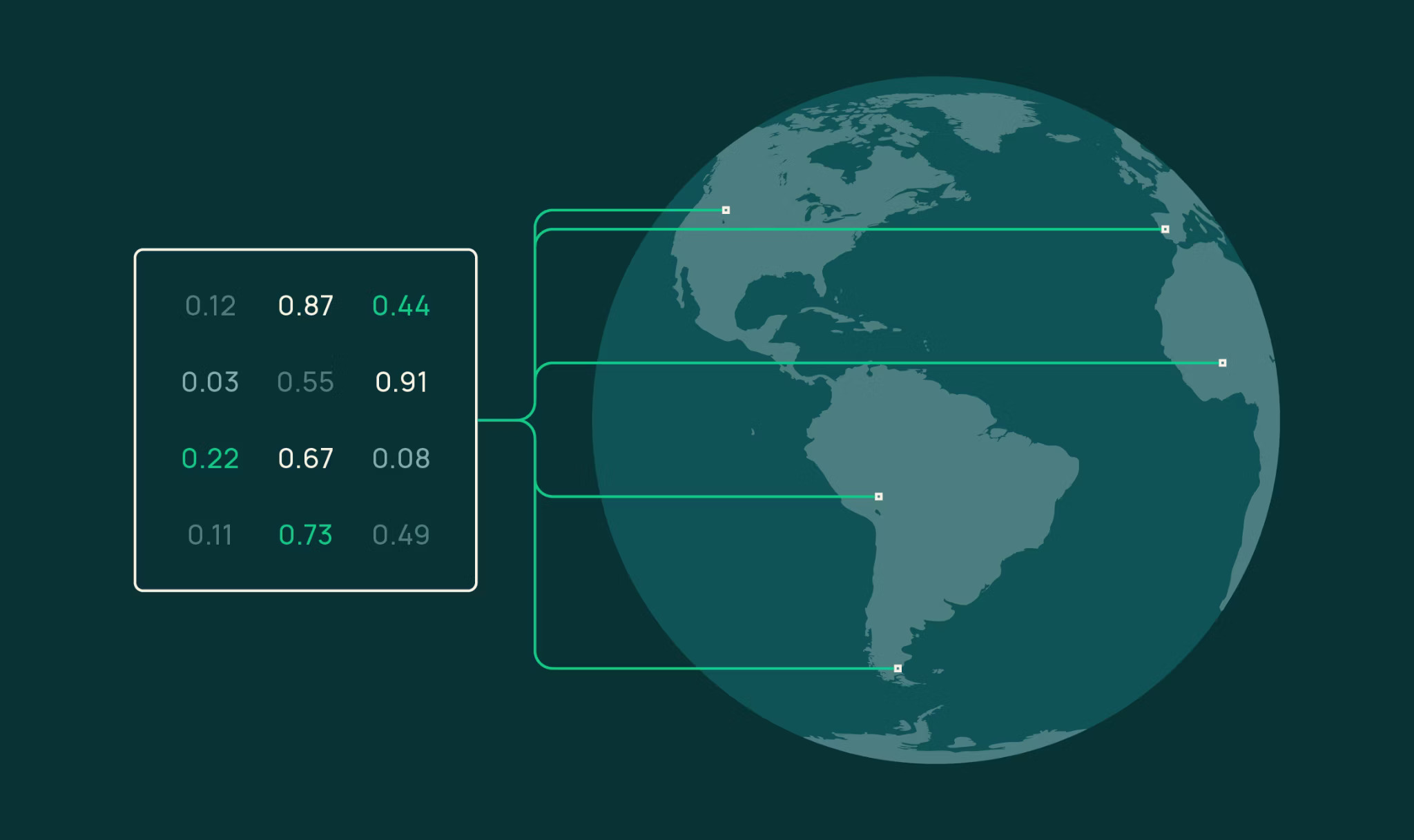
Introducing OlmoEarth embeddings: Custom embedding exports from OlmoEarth Studio for downstream analysis
A Blog post by Ai2 on Hugging Face
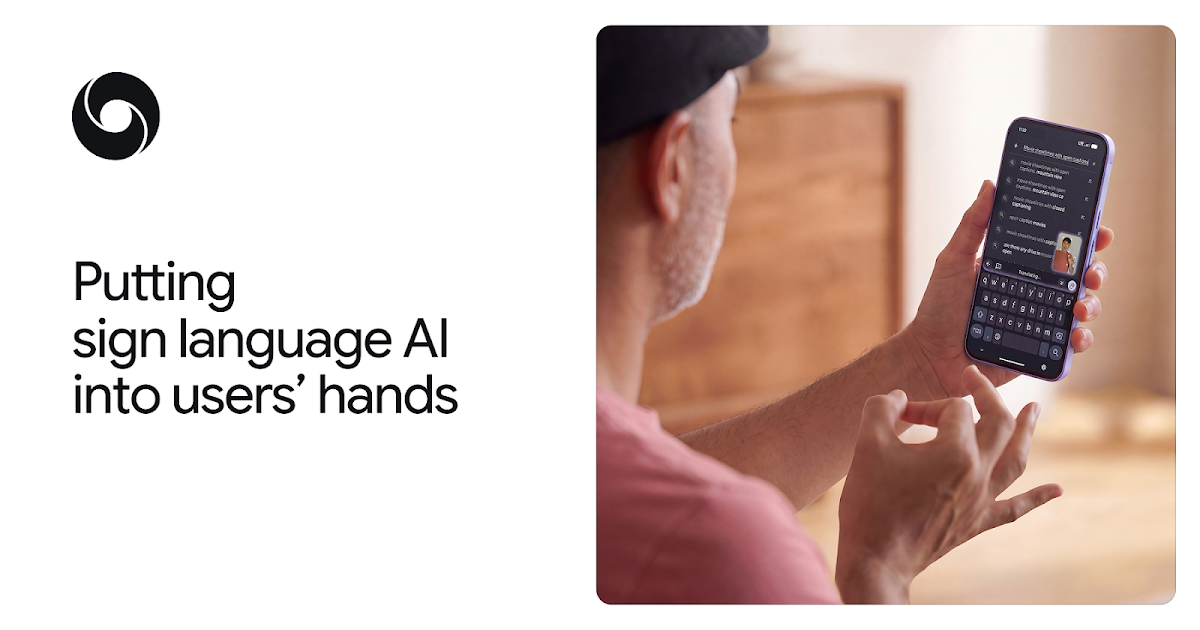
Putting sign language AI into users’ hands
Introducing sign-language-to-text (SL2T), our breakthrough model powering new sign language features for Deaf and hard of hearing users.

The benefits of medical AI assistance vary based on user expertise
Study finds non-experts deferred to LLM-based diagnostic assistance, even when it was wrong, while clinicians caught AI errors.
Related papers
EgoCITE: Context-Augmented Indexing and Time-Aware Retrieval for Long-Horizon Egocentric Memory
This work introduces EgoCITE (Egocentric Context-augmented Indexing and Time-aware Evidence retrieval), a long-horizon agentic memory framework for egocentric QA that improves accuracy over agentic memory baselines by at least 4.4--14.2% while achieving 36$\times$ lower cost than long-context LLM agents.
Bernstein-Vazirani Networks: Quantum Machine Learning by Interference
We introduce Bernstein-Vazirani Networks (BVNs), a non-variational quantum machine learning framework that leverages quantum interference for supervised learning, demonstrated on vision and representation learning tasks. In their standard form, BVNs follow the principle of quantum Fourier sampling: labelled data are placed in superposition and interfered in the Fourier basis to extract globally informative features. We then define generalised BVNs that enable interference in problem-adapted bases, yielding more expressive models under the same measurement budget as in the standard setting. BVNs achieve universal function approximation through (over)complete interference bases, while training of BVNs is gradient-free. Experiments on synthetic and real-world classification tasks, as well as implicit image representation, show strong generalisation capabilities and competitive performance with classical and quantum baselines.
Spikformer V2: Join the High Accuracy Club on ImageNet with an SNN Ticket
This work introduces a pioneering exploration of Self-Supervised Learning (SSL) within the SNN, and proposes a novel Spiking Self-Attention (SSA) and Spiking Transformer (Spikformer) that achieves 80+% accuracy on ImageNet.
Professional Software Developers Don't Vibe, They Control: AI Agent Use for Coding in 2025
Investigating how experienced developers use agents in building software, including their motivations, strategies, task suitability, and sentiments finds that while experienced developers value agents as a productivity boost, they retain their agency in software design and implementation out of insistence on fundamental software quality attributes.