
AI and the Future of Cybersecurity: Why Openness Matters
More from the blog
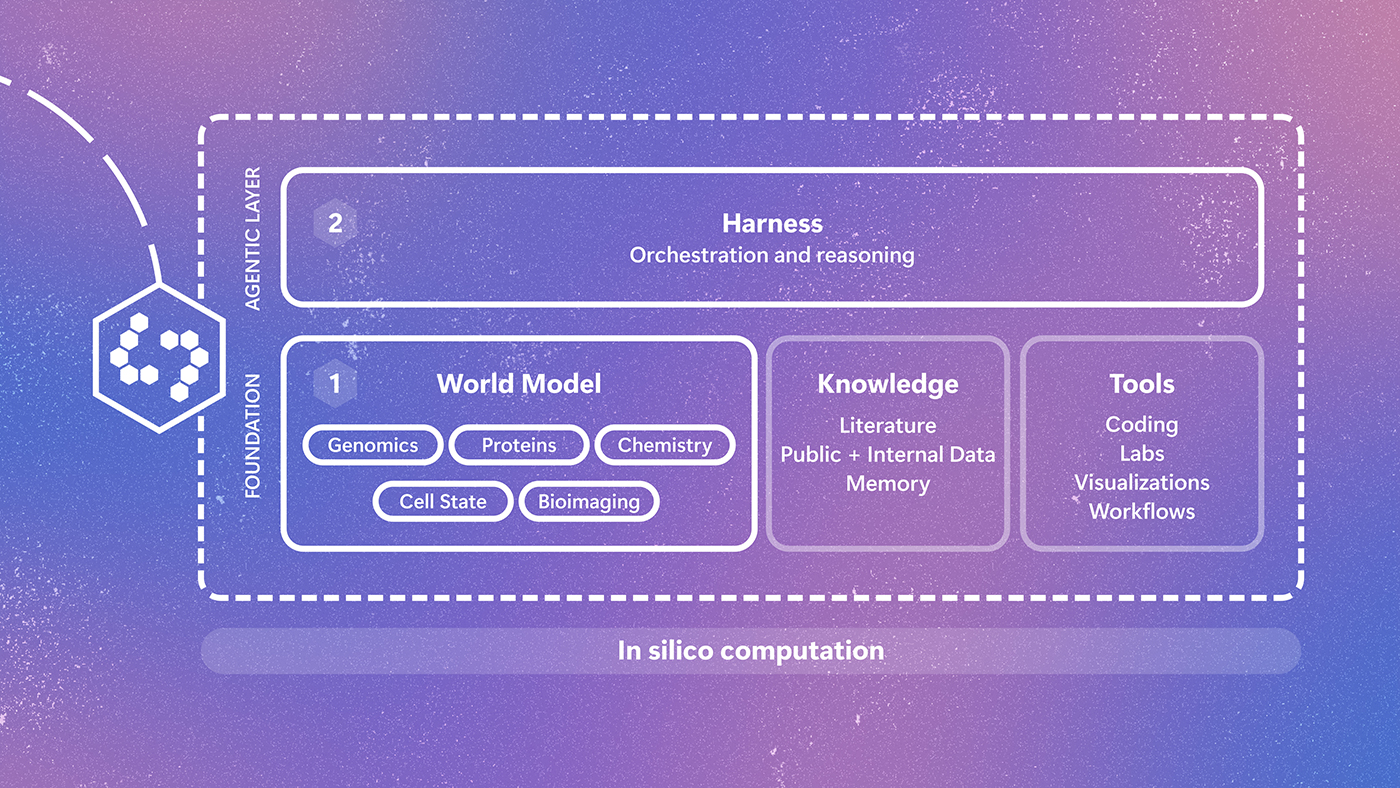
Introducing Quine: An AI research system designed for the complexity of biology
Biology doesn't operate in silos, and neither should the AI representation of it. Quine is an early-stage research effort to create a multimodal world model of biology. By connecting insights across biological scales and modalities, Quine helps scientists computationally search a space far larger than intuition allows and prioritize hypotheses before they reach the lab. Experimental results provide important feedback, helping researchers sharpen future research directions. The post Introducing Q…

Poitras Center to fuel early careers of 50 young scientists dedicated to psychiatric disorders research
Patricia and James Poitras ’63 provide fellowships for graduate students and postdocs who will shape the future of mental health research.

The future of practice: Enabling teachers to create learning interactives with generative UI
Education Innovation

Introducing Gemini 3.8 Flash and 3.8 Flash Cyber
Gemini 3.8 Flash and 3.8 Flash Cyber deliver next-generation intelligence for agentic workflows and cybersecurity.
Related papers
Adversarial Machine Learning: Security Risks and Defense Strategies in AI-Driven Applications
A detailed overview of the security risks associated with adversarial attacks is offered, including evasion attacks carried out at inference time, data poisoning that corrupts the training process, backdoor insertion that hides dormant triggers inside a model, and model inversion that leaks private information back out...
Secure AI Systems Protecting Machine Learning Models from Emerging Cyber Threats
Securing AI systems is not a task any single discipline can accomplish alone; it requires sustained collaboration between machine learning researchers, cybersecurity professionals, and policymakers if AI technologies are to remain reliable, trustworthy, and resilient in adversarial environments.
Retrosynthesis of Synthetic Media for Explainable AI Provenance Forensics
A self-referential retrosynthesis framework for explainable AI provenance forensics under a fixed-generator setting that leverages a jointly optimized encoder-decoder pair to implement a self-embedding mechanism that enables round-trip consistency verification.
Blockchain-Enabled Artificial Intelligence and AI Agents for Secure Data Sharing and Cybersecurity Applications
This paper presents a meta-synthesis that draws together four constituent studies covering adversarial machine learning, AI-powered anomaly detection in cloud environments, automated vulnerability patching by multi-agent large language model (LLM) pipelines, and the broader landscape of securing AI systems across their...