A low-carbon computing platform from your retired phones
Climate & Sustainability
More from the blog
How Much Memory Does Your Agent Actually Need?
A Blog post by IBM Research on Hugging Face

Build Low-Latency Multilingual Voice Agents: Open Weights & Full Deployment Control with NVIDIA Magpie TTS
A Blog post by NVIDIA on Hugging Face
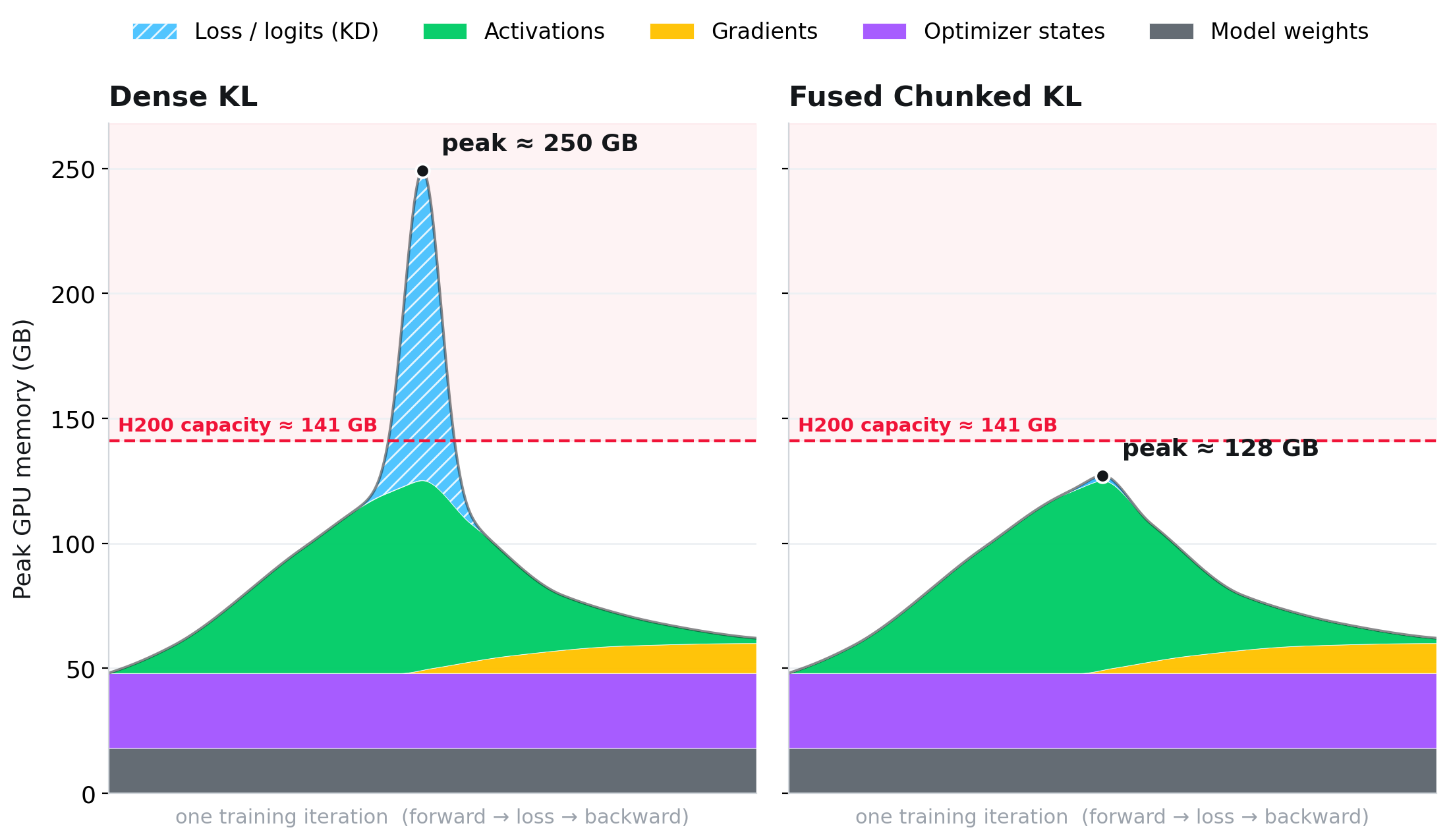
Making Knowledge Distillation Cheap Enough to Run at Scale
A Blog post by Multiverse Computing on Hugging Face
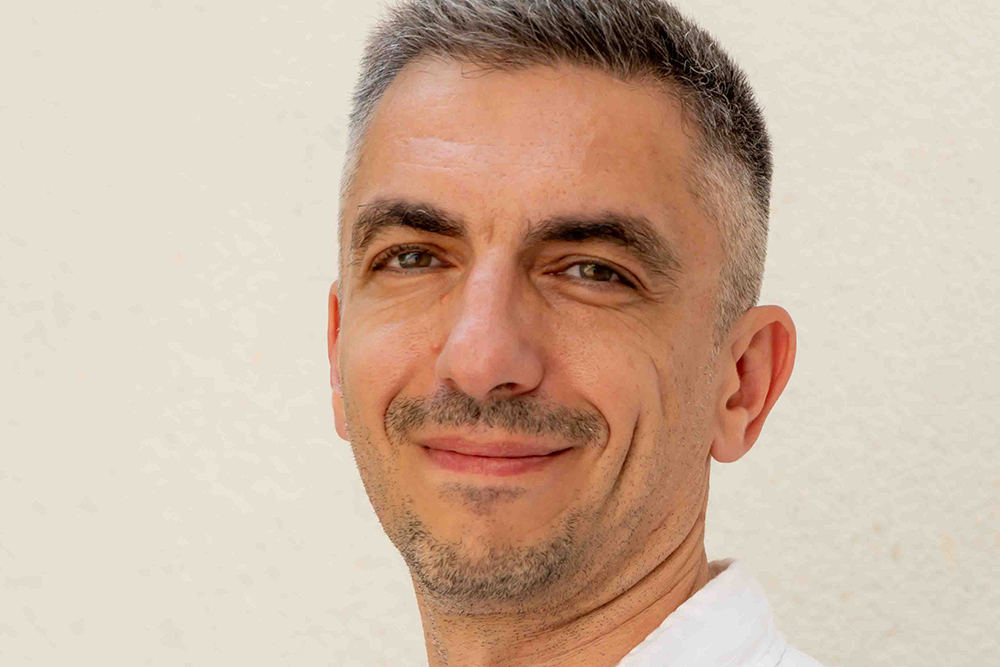
Alexander Rakhlin named director of the MIT Statistics and Data Science Center
An expert in machine learning, statistics, and computation, Rakhlin succeeds Professor Ankur Moitra.
Related papers
AoI Minimization in Heterogeneous MEC Networks: A Federated Learning-Assisted Hybrid DRL and Convex Approach
This paper investigates a dynamic heterogeneous mobile edge computing network (HMECN), where mobile devices (MDs) could offload their full tasks to a small base station (SBS) directly or the macro base station (MBS) in direct or relay mode. As age of information (AoI) is a comprehensive and accurate metric to capture the freshness of computation results, we formulate a long-term weighted sum AoI (LWSA) minimization problem in the HMECN by jointly optimizing the offloading decisions of MDs as well as the bandwidth and computation resource allocation of all base stations, subject to energy, delay and peak AoI constraints. To address the formulated non-convex mixed integer nonlinear programming problem, we decompose it into the offloading decision optimization (ODO) top-problem and the resource allocation optimization (RAO) sub-problem. Based on the decomposition, we propose a federated learning (FL)-assisted hybrid DRL and convex approach that is comprised of a safe multi-agent DRL algorithm, convex optimization and FL. The ODO top-problem is solved by the safe multi-agent DRL algorithm, which strictly ensures that the actions of each agent do not exceed its energy constraint and then paves the way for using convex optimization to solve the RAO sub-problem. FL is used to alleviate the training instability problem aggravated by multi-agent settings via breaking the limitation of partial knowledge for each individual agent. Simulation results demonstrate the superiority of the proposed approach in terms of the LWSA, convergence, scalability and robustness in dynamic environments.
Fermi-Dirac thermal measurements: A framework for quantum hypothesis testing and semidefinite optimization
Quantum measurements are the means by which we recover messages encoded into quantum states. They are at the forefront of quantum hypothesis testing, wherein the goal is to perform an optimal measurement for arriving at a correct conclusion. Mathematically, a measurement operator is Hermitian with eigenvalues in [0,1]. By noticing that this constraint on each eigenvalue is the same as that imposed on fermions by the Pauli exclusion principle, we interpret every eigenmode of a measurement operator as an independent effective fermionic mode. Under this perspective, various objective functions in quantum hypothesis testing can be viewed as the total expected energy associated with these fermionic occupation numbers. By instead fixing a temperature and minimizing the total expected fermionic free energy, we find that optimal measurements for these modified objective functions are Fermi-Dirac thermal measurements, wherein their eigenvalues are specified by Fermi-Dirac distributions. In the low-temperature limit, their performance closely approximates that of optimal measurements for quantum hypothesis testing, and we show that their parameters can be learned by classical or hybrid quantum-classical optimization algorithms. This leads to a new quantum machine-learning model, termed Fermi-Dirac machines, consisting of parameterized Fermi-Dirac thermal measurements-an alternative to quantum Boltzmann machines based on thermal states. Beyond hypothesis testing, we show how general semidefinite optimization problems can be solved using this approach, leading to a novel paradigm for semidefinite optimization on quantum computers, in which the goal is to implement thermal measurements rather than prepare thermal states. Finally, we propose quantum algorithms for implementing Fermi-Dirac thermal measurements, and we also propose second-order hybrid quantum-classical optimization algorithms.
DRUDM-CFG: A Fairness-Aware Multi-Agent DRL Algorithm for AMEC-Assisted Task Offloading in Post-Disaster Scenarios
High-altitude airships (HAS) and uncrewed aerial vehicles (UAVs) equipped with Multiaccess Edge Computing (MEC) servers have emerged as promising aerial MEC nodes for providing task offloading (TO) services to intelligent mobile devices (IMDs) in post-disaster scenarios. HAS offers robust computing and energy resources, while UAVs provide flexible, low-altitude coverage for rapid deployment. However, direct task offloading from IMDs to HAS often leads to task failures due to high transmission delays. UAVs with limited onboard resources require to minimize resource waste. Additionally, IMDs in sparse areas face insufficient TO services due to unfair UAV coverage. This paper defines these challenges as a joint optimization problem involving TO, RA, and UAV coverage fairness. It proposes a cooperative aerial Multiaccess Edge Computing (AMEC) framework integrating HAS and UAVs to address the issue. Within this framework, a hybrid TO scheme is first developed to mitigate the high transmission delay between IMDs and HAS. Second, a Distance, Resource, Urgency-based Decision Mechanism (DRUDM) is designed to enhance the accuracy of UAVs in selecting target IMDs for TO services. Third, a Coverage Fairness Guarantee (CFG) strategy is proposed to optimize UAV flight trajectories, ensuring IMDs in sparse areas receive fair TO services. Finally, the joint optimization problem is modeled as a Multi-Agent Partially Observable Markov Decision Process (MA-POMDP), and a DRUDM–CFG algorithm is presented to efficiently solve this complex non-convex optimization problem. Experimental results demonstrate that the proposed algorithm outperforms other compared algorithms in task completion rate and average delay, benefiting from the DRUDM mechanism. Meanwhile, the CFG strategy effectively improves TO service fairness for IMDs in sparse areas.
Toward 6G Edge Intelligence: Lightweight LLMs for Intent-Driven Network Automation
Future 6G networks are envisaged to tightly integrate communication, sensing, and computing, demanding real-time, intent-driven intelligence at the edge. While large language models (LLMs) excel in intent recognition and semantic reasoning, their application to real-time network lifecycle management at the edge is limited by heterogeneous application intents (APPIs), dynamic network conditions, and severe resource constraints. This paper proposes a novel lightweight LLM architecture, KGLlama-KD, that synergizes knowledge graphs (KGs) with knowledge distillation (KD) to enable intent-driven networking and enhance 6G edge intelligence. Specifically, a KG is constructed to formally describe the relationships among application scenarios, functional primitives, performance requirements within APPIs, and the correspondences between APPIs and network service requests (NSRs), thereby producing a structured intent training dataset. Building upon the Llama 3 foundation model, a two-phase optimization framework is designed to support lightweight edge deployment while preserving translation fidelity. The LLM is first fine-tuned with KG guidance and compressed via KD in the cloud, and then deployed on resource-constrained edge nodes to perform real-time, accurate, and efficient APPIs interpretation. Experiments validate that KGLlama-KD achieves 95% accuracy for APPI understanding, surpassing DeepSeek and Qwen by an average of 8%. The distilled model reduces inference latency by 60% compared to full-scale LLMs, fulfilling the sub-100 ms requirement for 6G latency-sensitive services.